| |
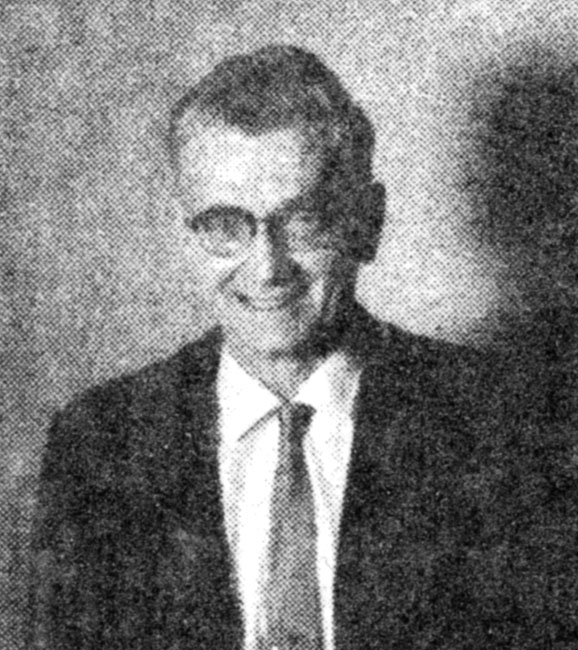
Richard Keeling (1907-1969) was a historian and author who dedicated much of his life to documenting the history of Texas' lumber and railroad industries. His research has contributed significantly to our knowledge of the equipment and methods used in the forests of East Texas and Louisiana, and of specific lumber operations, notably Southern Pine, Temple and the Kirby Lumber companies. Keeling also traded extensively with fellow railroad photographers and collectors of his time, and many of those images are included in the photograph collection.
Richard Wilson Keeling was born September 7, 1907 in Vieques, Puerto Rico, where the family lived until relocating to the Fayetteville, Arkansas area in 1911, then to Houston in 1916. Keeling was educated in engineering and geology, and spent much of his career in the oil and gas industry doing seismic and survey work for Geo Space Corporation of Houston. He married his wife Katie and to that union were born three sons, W.R., Howard and Jim.
Keeling's occupation allowed him the chance to travel frequently in the field into remote sections of East Texas and Louisiana. Whenever possible, he visited the remains of abandoned railroads and saw mill sites, and visited lumber operations that had survived into the 1950s and 1960s. When Keeling was not traveling in connection with his survey work, he often made personal excursions into East Texas to conduct research. Keeling sought out former or current railroad and lumber company employees, and through these contacts he was able to preserve data, personal stories, and photographs.
In addition to tracking down information "in the field", Keeling helped establish the Gulf Coast Railroad Club, becoming president of that club in 1965, and was a member of the Southwest Railroad Historical Society and the National Railway Historical Society. In addition to his railroad interests, he was an avid amateur radio afficianado, known as station "W5JQ" to those in the ham radio community.
According to his son Jim Keeling, his father hoped to author a general history of Texas logging railroads. We also learn from Keeling's own correspondence that he had a particular interest in the Kirby Lumber Company, and that he wished to write a comprehensive history of that company. Keeling made good progress toward these larger projects, but serious health problems began to reduce his ability to travel or to continue the steady correspondence he had kept up with during what was otherwise his most prolific period of research in decade of the 1960s. Richard Keeling finally succumbed to his health issues, and he passed away in March of 1969 in Houston, Texas at the age of 61.
We are deeply grateful to Jim Keeling and the Keeling family for their generous donation of their father's collection. Their generosity has made it possible that all of us can enjoy the fruits of Richard Keeling's long and excellent labor of love. |
|
| |
Processing of the material in the Keeling collection is incomplete, but we estimate there to be approximately 4500 photographic images in print or negative form, and about 600 pages of correspondence, notes, and typescripts of articles that were published by the Gulf Coast Chapter of the National Railway and Historical Society. Digitization of the correspondence and typescript material is complete, while processing of the images is ongoing, with priority determined by quality of image and/or uniqueness of subject. |
|